Automotive
Composite Seat Development for FIA Homologation
Advanced Composite Engineering for Next Generation Motorsport Seating
The Challenge
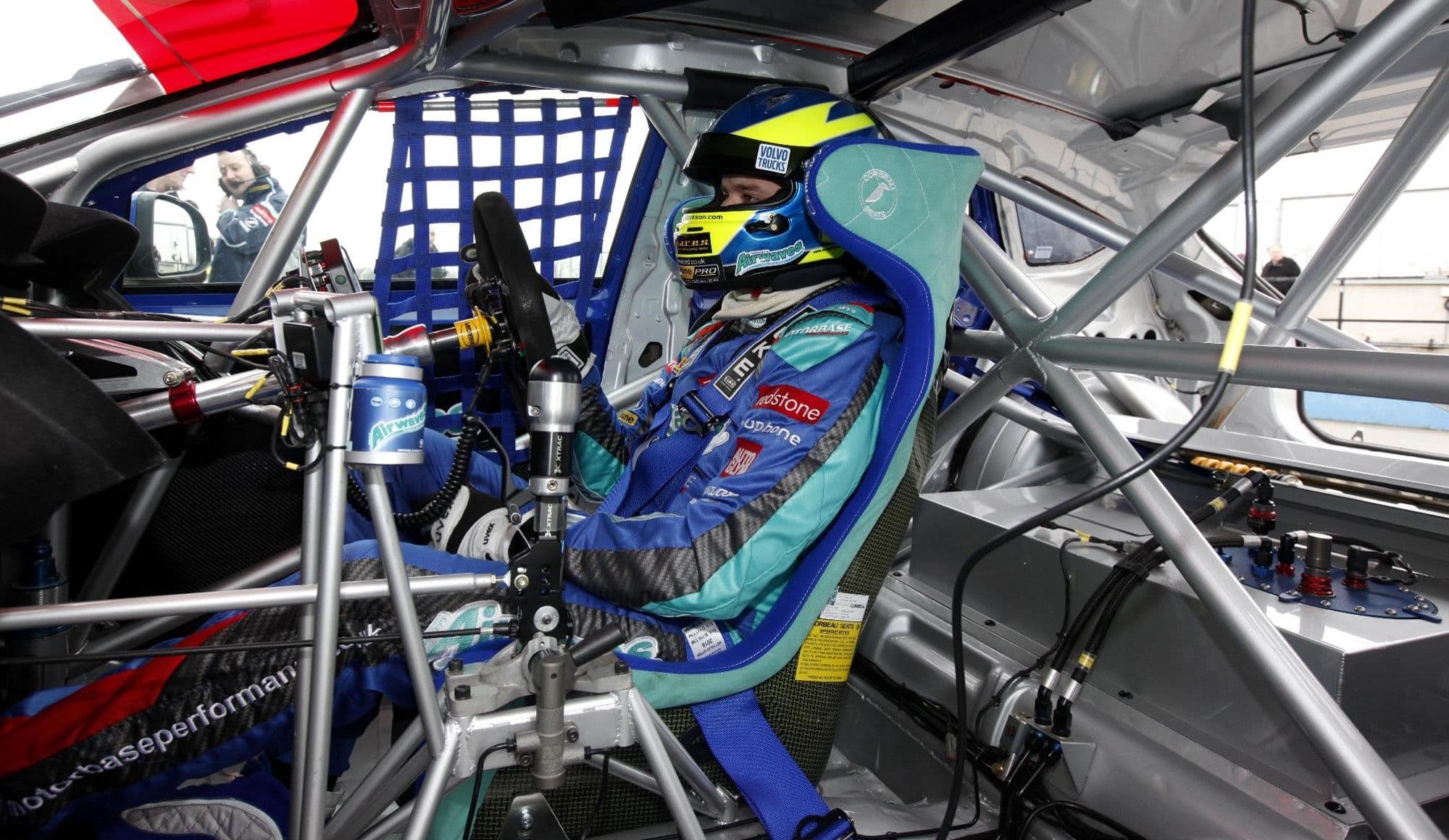
The introduction of increasingly demanding FIA safety standards has transformed the design and development of motorsport seating. What was once a product developed largely through experience and physical testing must now satisfy stringent crash performance, occupant protection and homologation requirements.
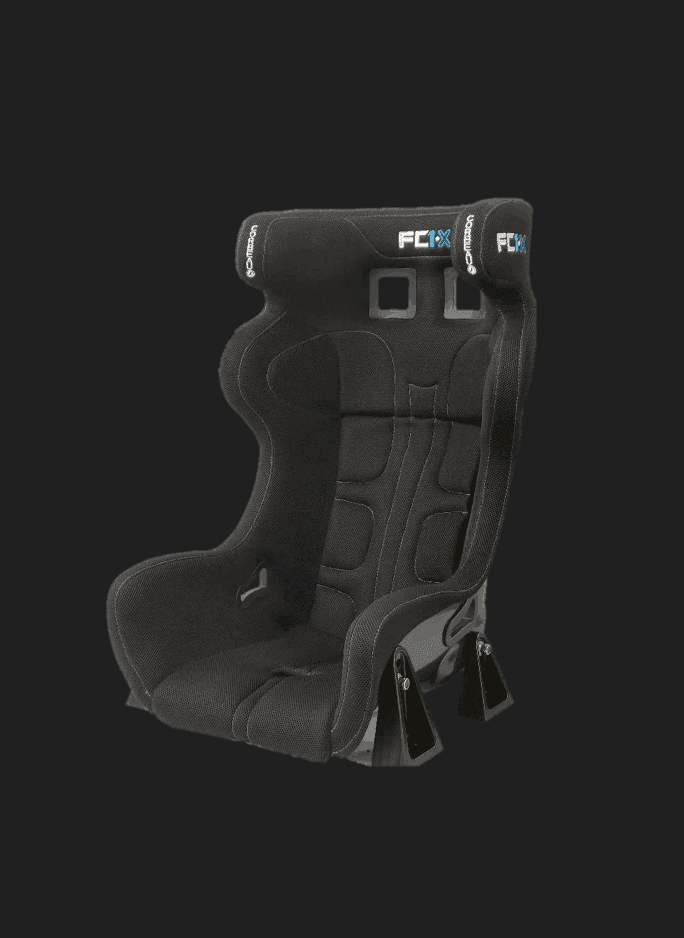
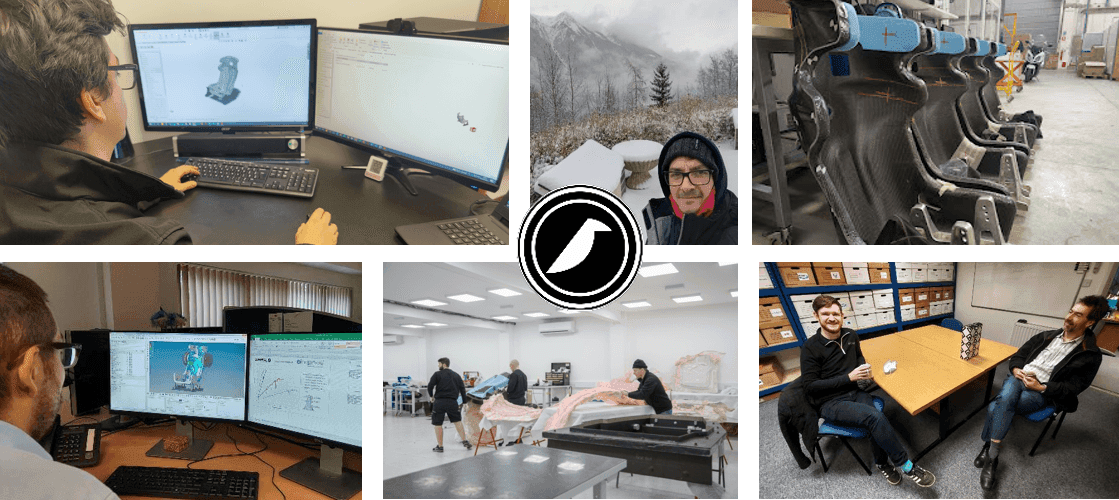
Simpact supported the development of a new generation composite motorsport seat through the application of advanced Computer Aided Engineering (CAE), material characterisation and structural optimisation techniques. The objective from our customer Corbeau, was to deliver an FIA-compliant seat structure that balanced safety, performance, manufacturability and cost.
Modern FIA homologated racing seats must withstand severe impact and load cases while remaining lightweight, comfortable and commercially viable.
The project required:
- Development of a lightweight composite seat structure.
- Compliance with FIA seat safety standards.
- Optimisation of carbon fibre and glass fibre materials.
- Reduction of development risk before certification testing.
- Efficient use of costly composite materials.
- Correlation between CAE predictions and physical test performance.
Traditional "build and test" methods would have required multiple expensive prototype iterations. The customer needed a development approach that would reduce programme risk while accelerating time to homologation.
Approach
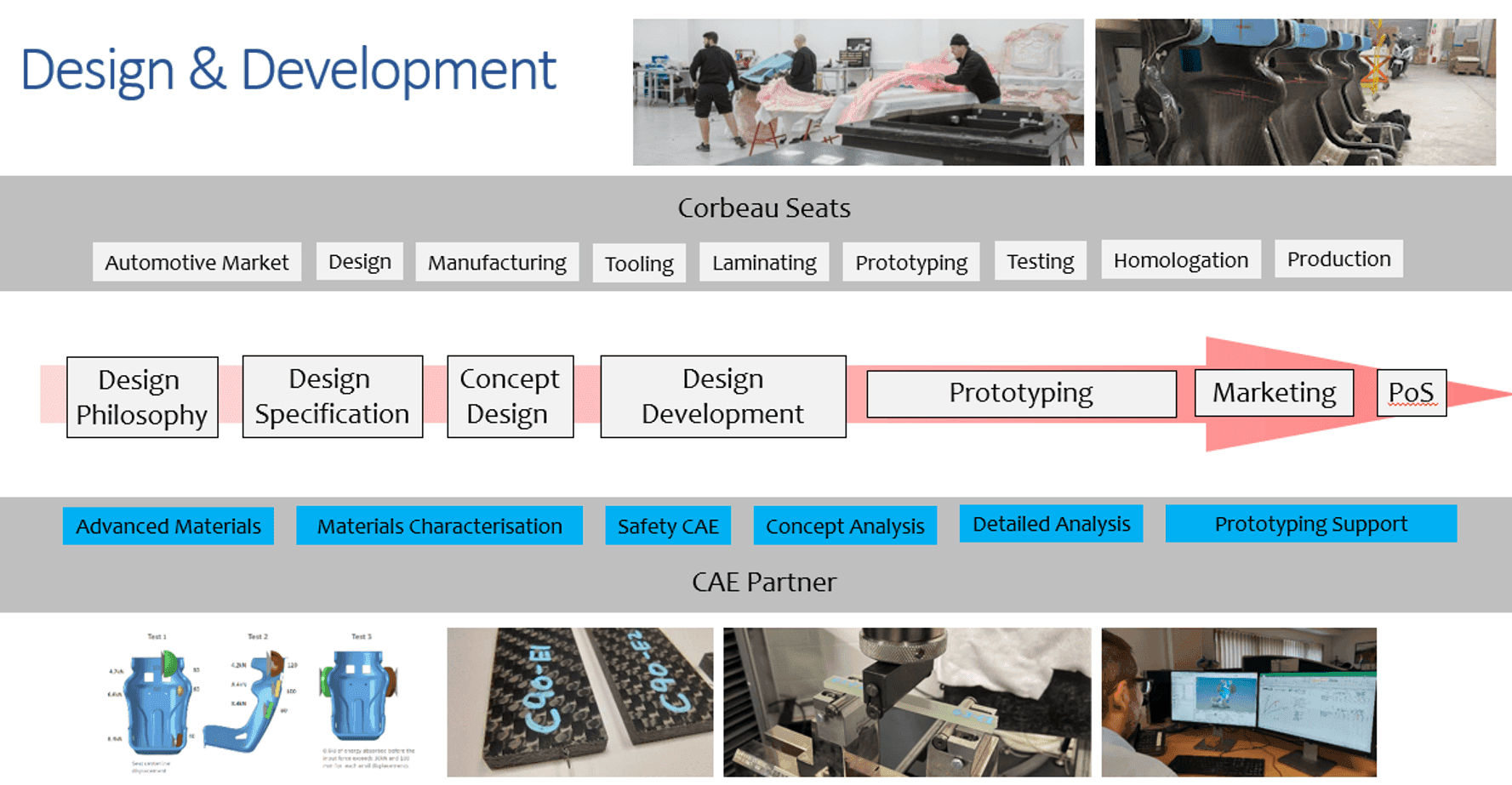
Our approach complimented our seating partners skills and experience and followed Simpact's established product development methodology, the programme progressed through:
- Design specification
- Materials characterisation
- Concept development
- Detailed CAE analysis
- Prototype support
- Certification testing
- Production readiness
This structured process ensured engineering decisions were based on measurable performance data rather than assumptions.
Composite Material Characterisation
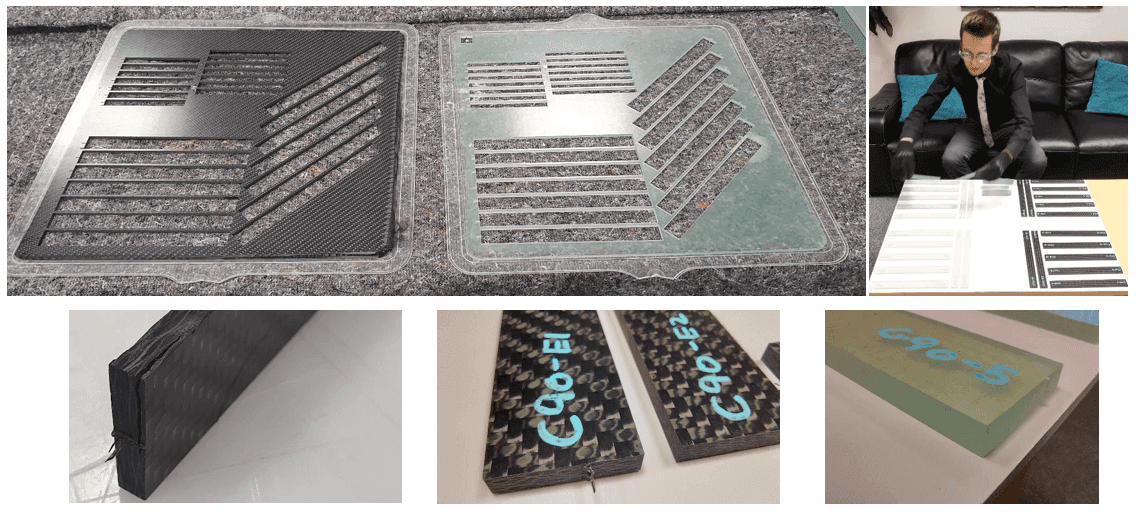
A critical element of the programme was the detailed characterisation of composite materials before structural analysis commenced.
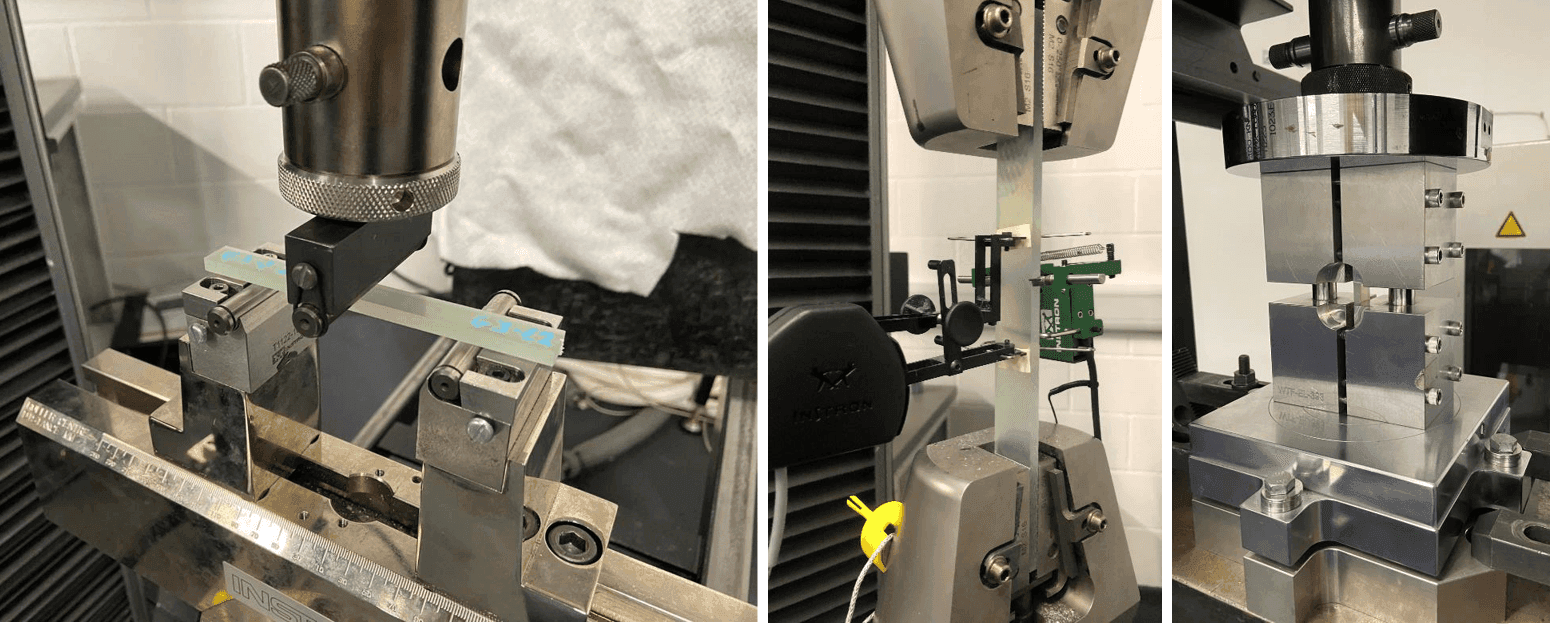
Test panels were maufactured by the manufacturer and coupons were water jet cut into specific sample geometries for testing under :
- Tensile loading
- Compression loading
- Bending
- Interlaminar shear
- In-plane shear
Testing was conducted at multiple fibre orientations to establish accurate material properties for subsequent finite element modelling.
The resulting dataset enabled the CAE model to represent real-world behaviour with a high degree of confidence.
Concept Design & Development
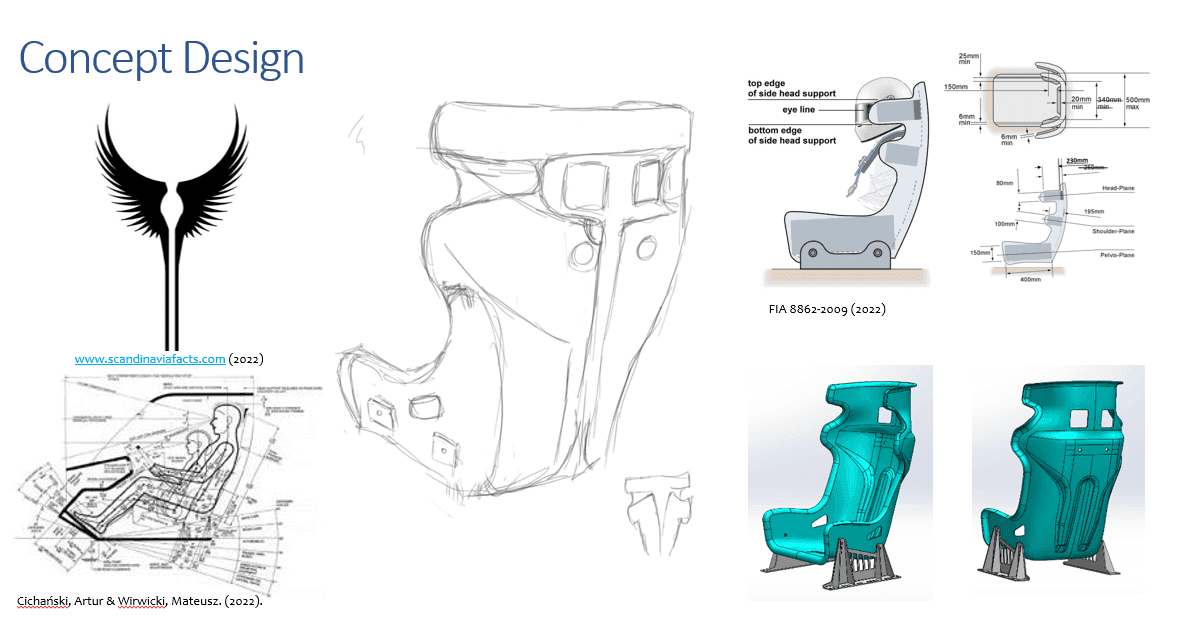
The seat architecture was developed using a combination of:
- FIA package requirements
- Anthropometric data
- Driver ergonomics
- Occupant protection requirements
- Motorsport design constraints
Initial concepts evolved from simple layouts into fully detailed CAD models suitable for structural assessment and optimisation.
Early finite element studies were used to identify potential high-stress regions and refine the fundamental load paths within the design
Detailed CAE Analysis
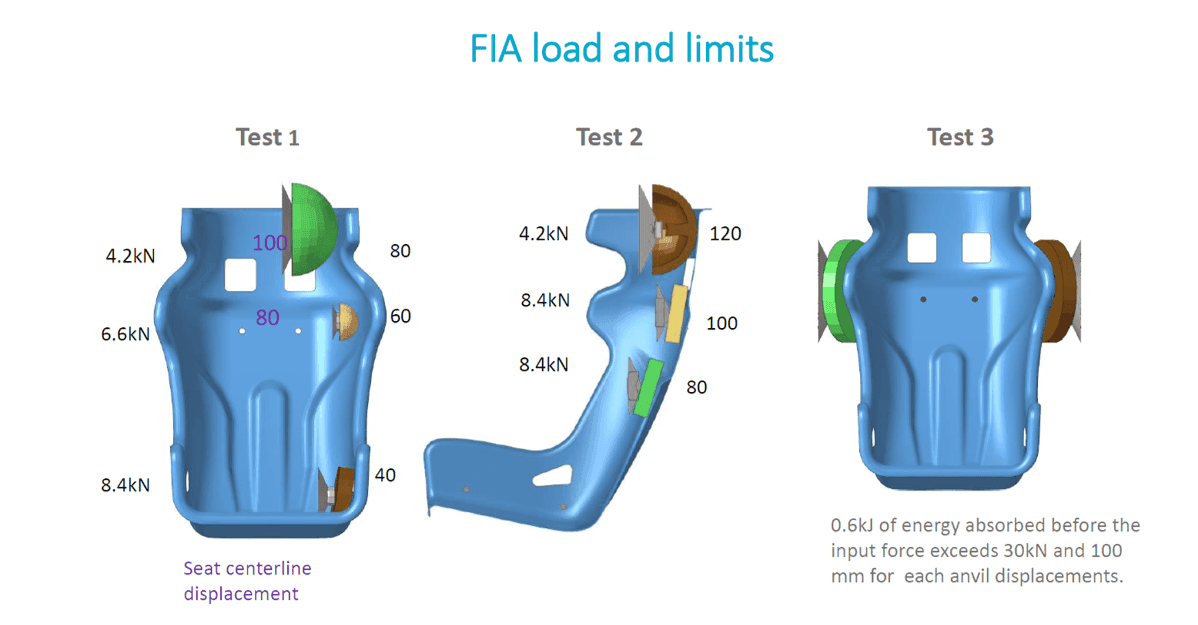
With material properties established, Simpact undertook detailed finite element analysis of multiple load cases relevant to FIA certification requirements.
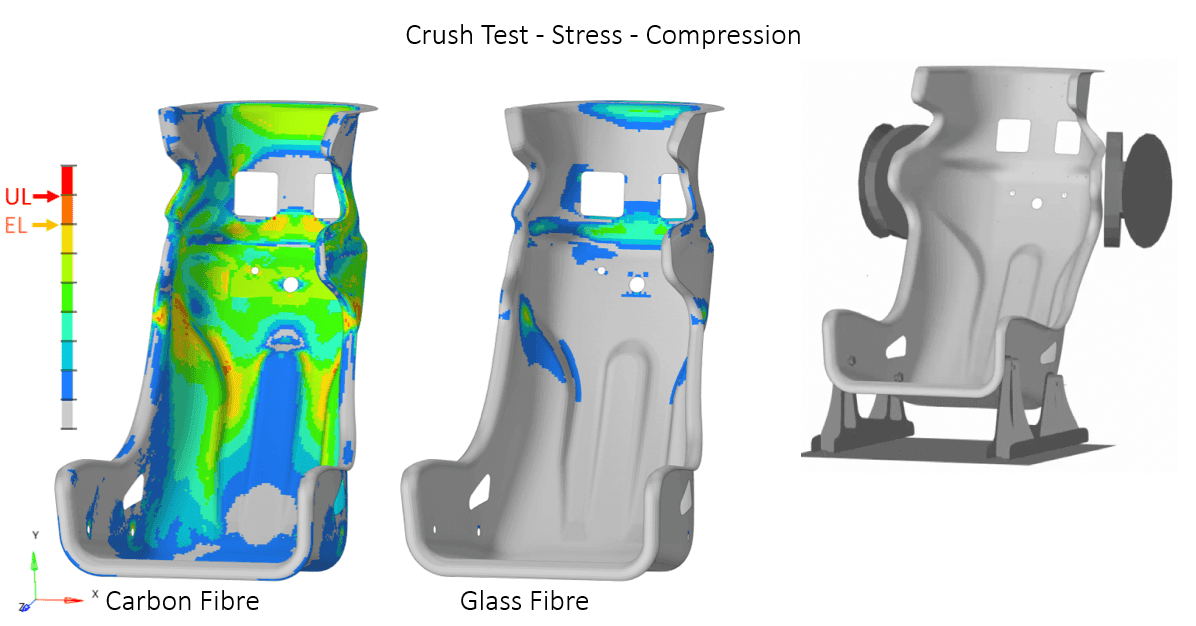
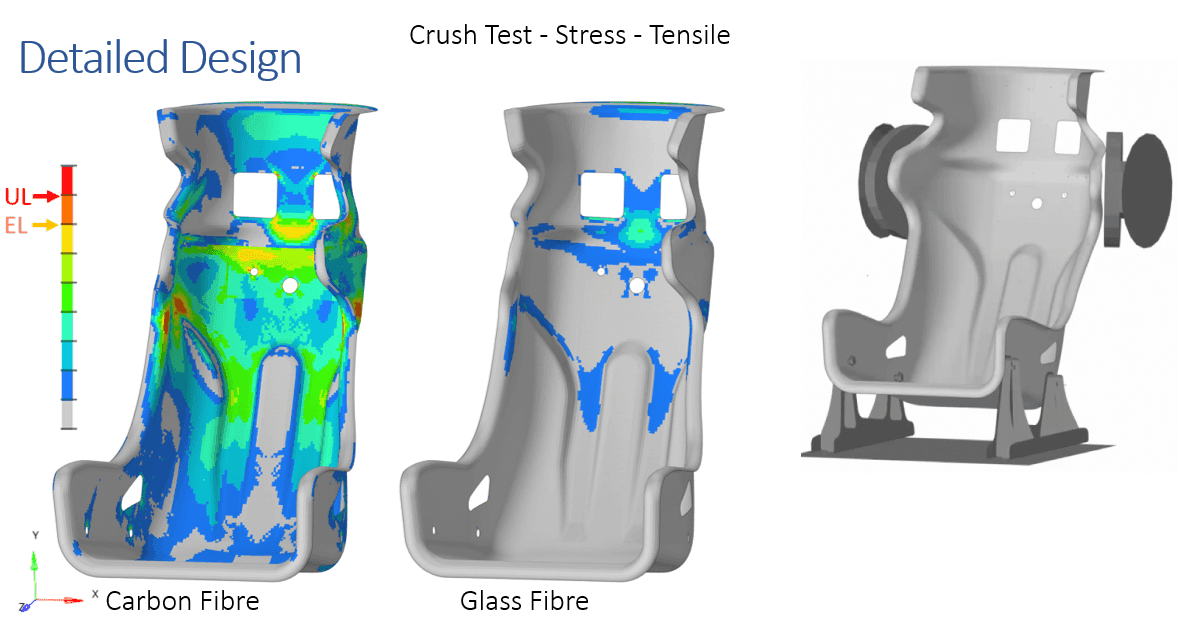
The analysis demonstrated that the highest tensile and compressive stresses occurred in the outer seat skins.
This enabled the development of an efficient sandwich construction featuring:
- Carbon fibre outer plies for maximum strength and stiffness.
- Glass fibre internal layers for cost-effective structural support.
- Local reinforcement patches only where required.
The result was a lightweight, high-performance structure that made efficient use of premium carbon fibre materials while maintaining target safety performance.
Certification Support
A major objective of the development programme was to minimise uncertainty during physical certification.
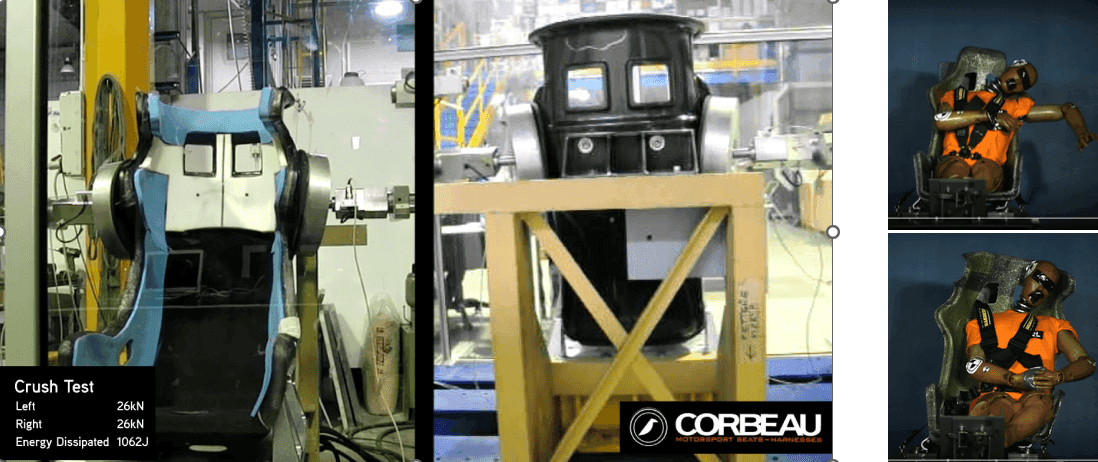
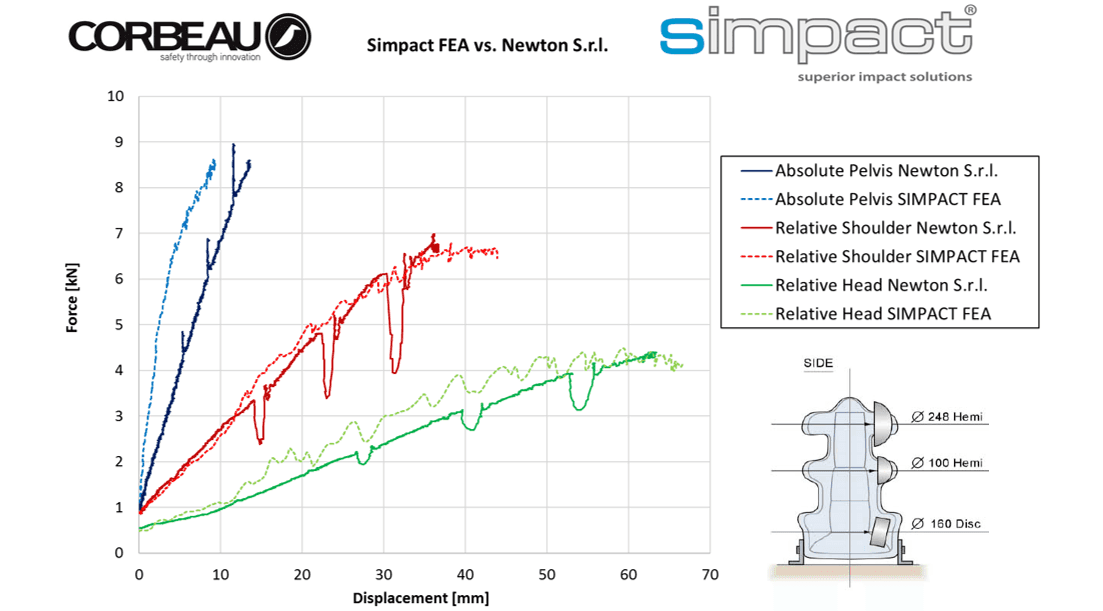
The correlation between simulated behaviour and physical testing proved extremely strong, giving confidence that certification testing would become a validation exercise rather than a design discovery process.
This reduced:
- Programme risk.
- Development costs.
- Number of prototype iterations.
- Homologation stress and delays.
The project demonstrated how advanced CAE can be used to predict real-world performance before formal testing begins
Results & Key Outcomes
This project highlights how great teamwork between Simpact and their customers can combine the following to produce innovative products with confidence.
- Advanced CAE simulation
- Composite structure expertise
- Material characterisation
- Motorsport safety engineering
- Physical test correlation.
Key outcomes for our client
✅ FIA-compliant composite seat development
✅ Detailed composite material database created
✅ Optimised carbon fibre / glass fibre sandwich construction
✅ Reduced prototype and testing risk
✅ Strong correlation between simulation and physical testing
✅ Lightweight structure with controlled material costs
✅ Accelerated route to certification and production
By integrating digital engineering with real-world testing experience, Simpact enables manufacturers to reduce development risk, improve performance and achieve certification more efficiently
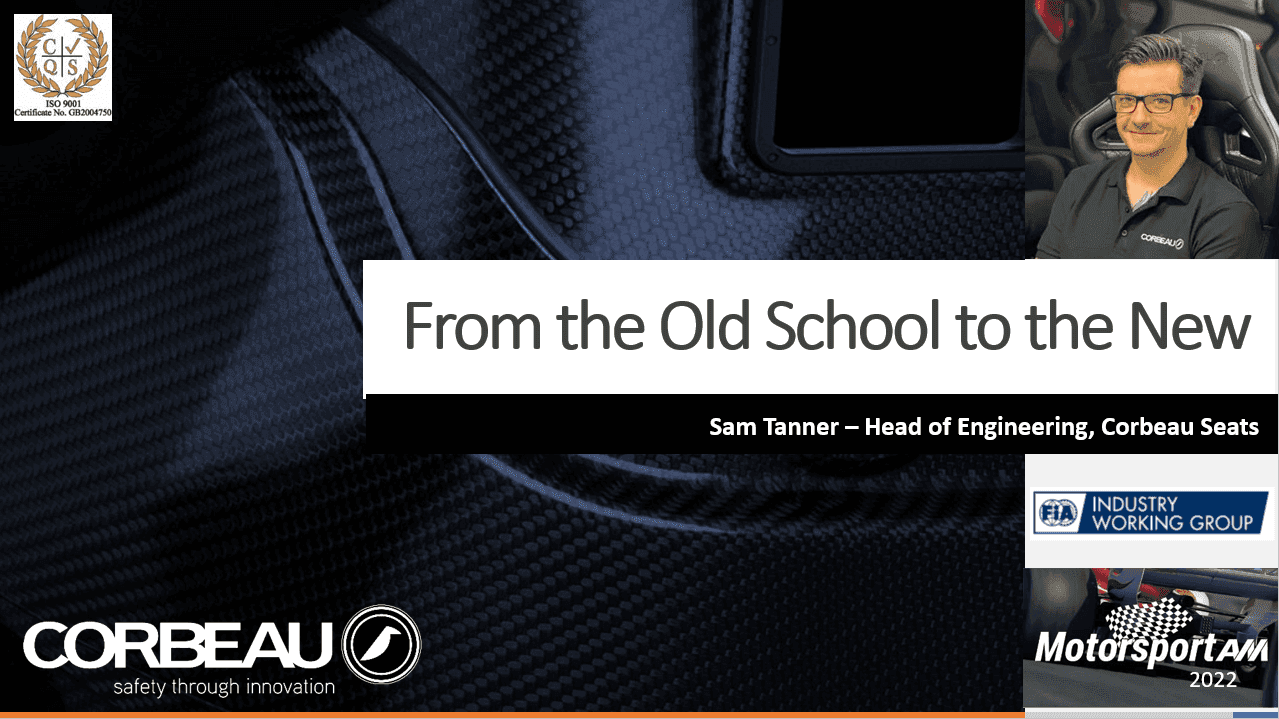
With thanks to our customer, Corbeau Seats who also presented this project at Motorsports AM 2022
Click here to download the presentation by Sam Tanner, Head of Engineering.